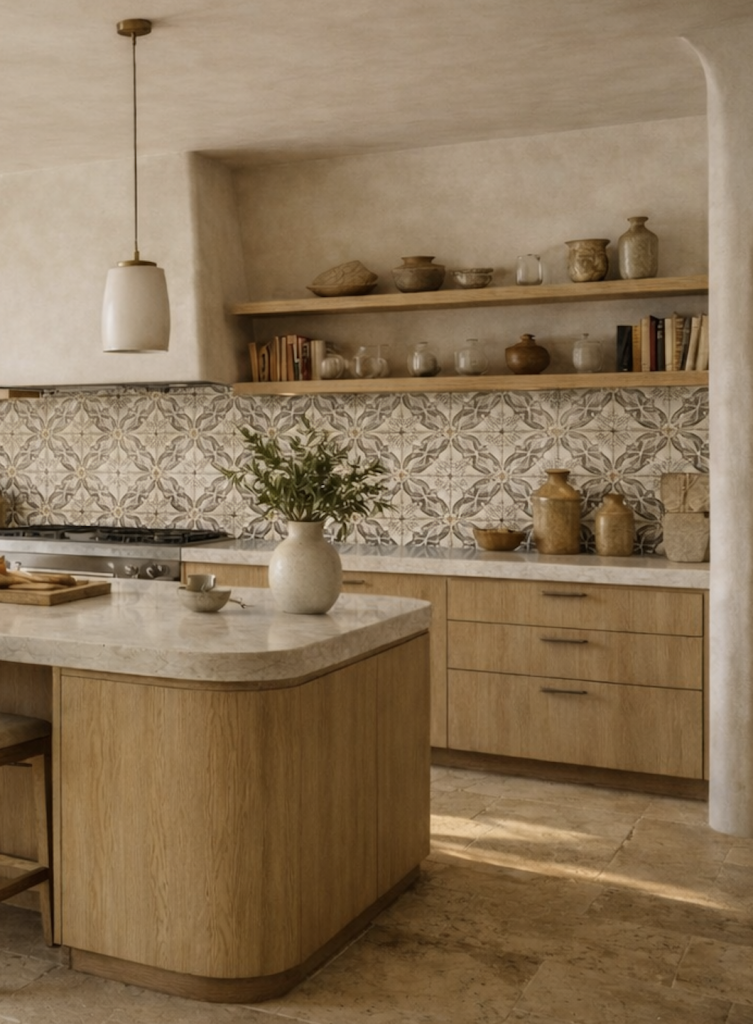
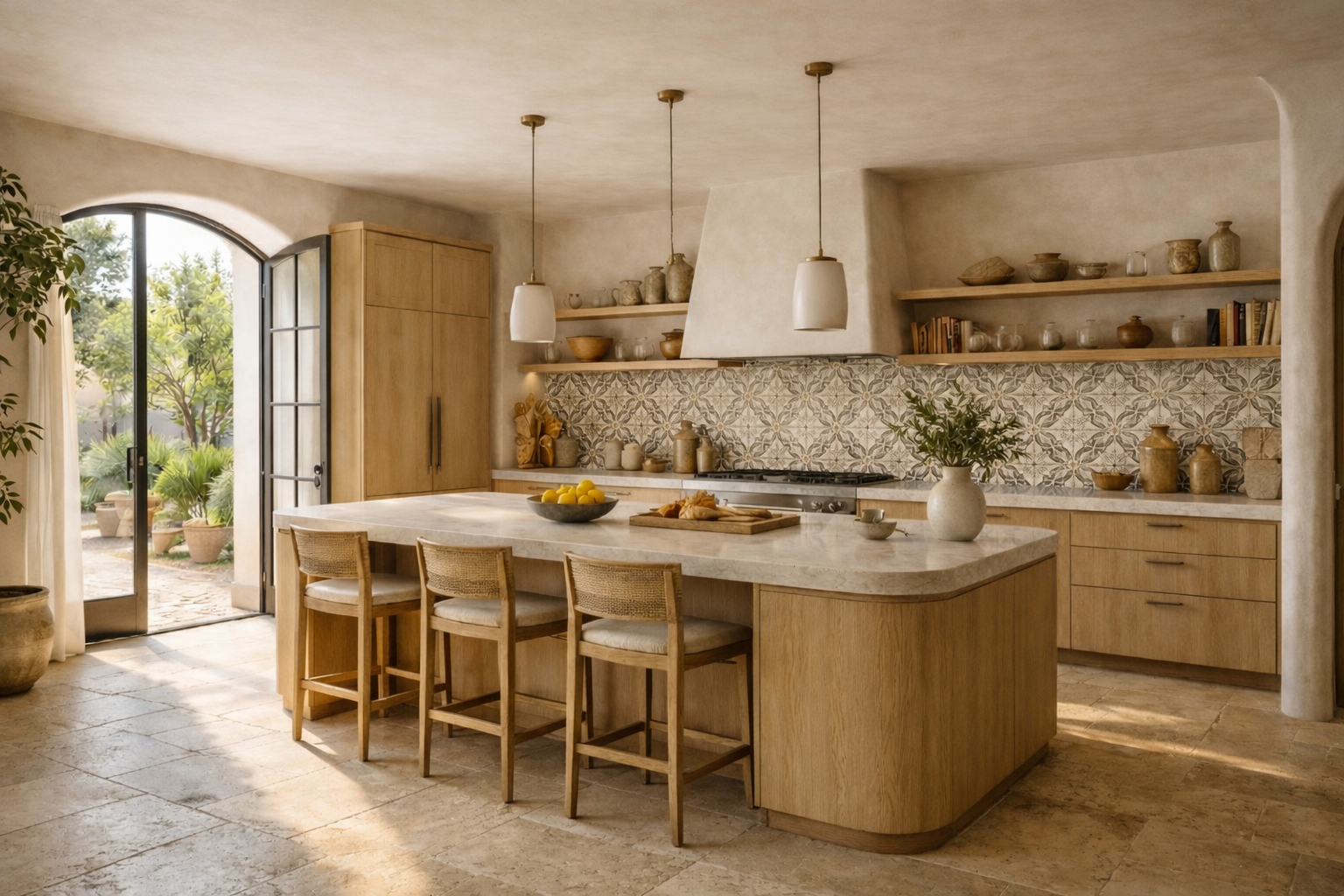
Most kitchens today are busy, not just with activity, but with visual noise. Shiny finishes compete for attention, appliances dominate the room, and design choices often feel disconnected from how people actually live. Instead of feeling welcoming, the kitchen can end up feeling cold, overwhelming, or overly styled. Mediterranean kitchen design solves that problem.
At its heart, the Mediterranean style is about warmth, authenticity, and connection. Inspired by homes across Italy, Spain, Greece, and the coastal regions of southern France, this design approach creates kitchens that feel grounded, inviting, and deeply human. These are spaces meant for cooking slowly, gathering often, and enjoying everyday rituals, not rushing through them.
Mediterranean kitchens aren’t trend-driven. They’re timeless. They draw on centuries of architecture, craftsmanship, and materials that have proven their beauty and durability over generations. That’s why this style continues to resonate so strongly today, it doesn’t just look good, it feels good to live in.
What Mediterranean Kitchen Design Really Is
Mediterranean design is rooted in place. It reflects the climate, culture, and lifestyle of regions where homes are built to stay cool, welcome guests, and age gracefully over time. In kitchens, this translates into spaces that feel open, tactile, and intentional rather than polished or perfect.
Unlike modern kitchens that prioritize sleekness above all else, Mediterranean kitchens embrace texture and imperfection. Wood shows its grain. Stone has variation. Plaster walls aren’t perfectly smooth. These elements create depth and character, making the kitchen feel lived-in rather than staged.
What makes this style work so well in kitchens is its balance. Mediterranean design blends rustic charm with refined craftsmanship. It feels relaxed but never careless, elegant but never formal. The result is a kitchen that supports daily life while also elevating it, a space that invites people to linger, talk, cook, and connect.
The Mediterranean Color Palette: Sun-Washed and Grounded
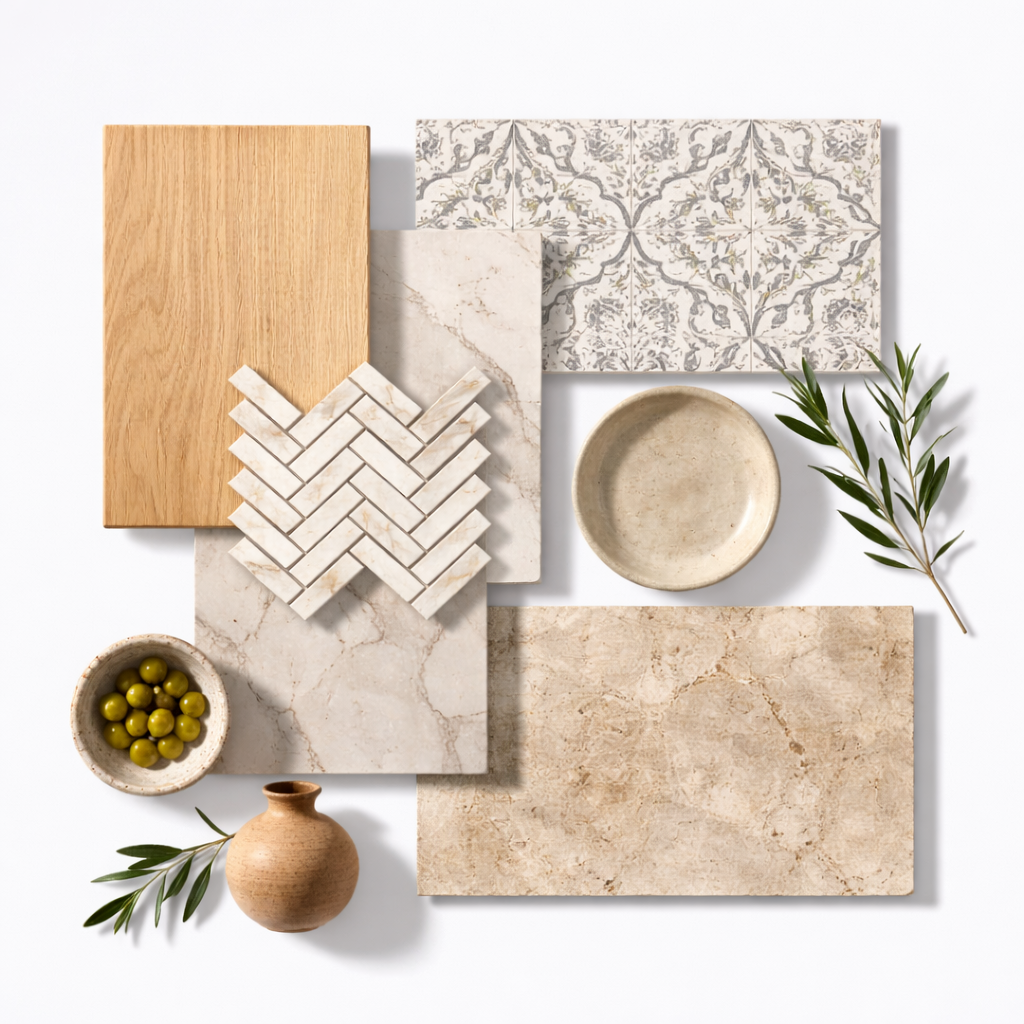
One of the first things you notice in a Mediterranean kitchen is the color palette. It’s inspired directly by the surrounding landscape: earth, sea, stone, and sun. Instead of bold contrasts or trendy hues, Mediterranean colors are warm, layered, and calming.
Walls are often finished in soft whites, creams, or warm beiges that reflect natural light and make the space feel open. These neutrals act as a backdrop for richer tones, terracotta, clay, olive green, deep blue, and warm browns, that appear through tile, cabinetry, or décor.
The key is restraint. Mediterranean kitchens don’t rely on many colors at once. Instead, they layer a few complementary tones to create depth without chaos. A neutral plaster wall paired with natural wood cabinets and a blue-and-white tiled backsplash, for example, feels rich but never overwhelming.
Natural Materials: The Soul of Mediterranean Kitchens
Mediterranean kitchen design is built on materials that feel honest and enduring. These kitchens don’t hide behind synthetic finishes or glossy surfaces. Instead, they celebrate materials that improve with age.
Wood is everywhere, used for cabinetry, ceiling beams, shelving, and furniture. It brings warmth and structure to the space, grounding lighter elements like stone or plaster. Stone is equally important, often appearing in countertops, backsplashes, floors, and range hoods. Whether it’s marble, limestone, travertine, or rustic stone, these surfaces add weight and permanence.
Terracotta tiles are another defining element, especially on floors. Their earthy color and slightly irregular surface instantly evoke old-world Mediterranean homes. Plaster or stucco walls soften the space visually, while wrought iron details, found in lighting, hardware, or accents, add contrast and craftsmanship.
Together, these materials create a kitchen that feels organic and connected to nature rather than manufactured.
Designed for Living
Mediterranean kitchens are designed around how people actually use them. They’re meant to accommodate movement, conversation, and shared meals, not just cooking efficiency.
Layouts often feel open and fluid, with generous work surfaces and islands that double as gathering spots. Cabinetry is substantial but not heavy, often balanced by open shelving or glass-front cabinets that keep the space visually light. Appliances are integrated where possible, allowing architectural elements and materials to take center stage.
Lighting plays a crucial role here. Instead of relying on harsh overhead lights, Mediterranean kitchens use layered lighting to create atmosphere. Natural light is prioritized through windows and arched openings, while pendant lights and wall sconces provide warmth in the evening.
Architectural Details
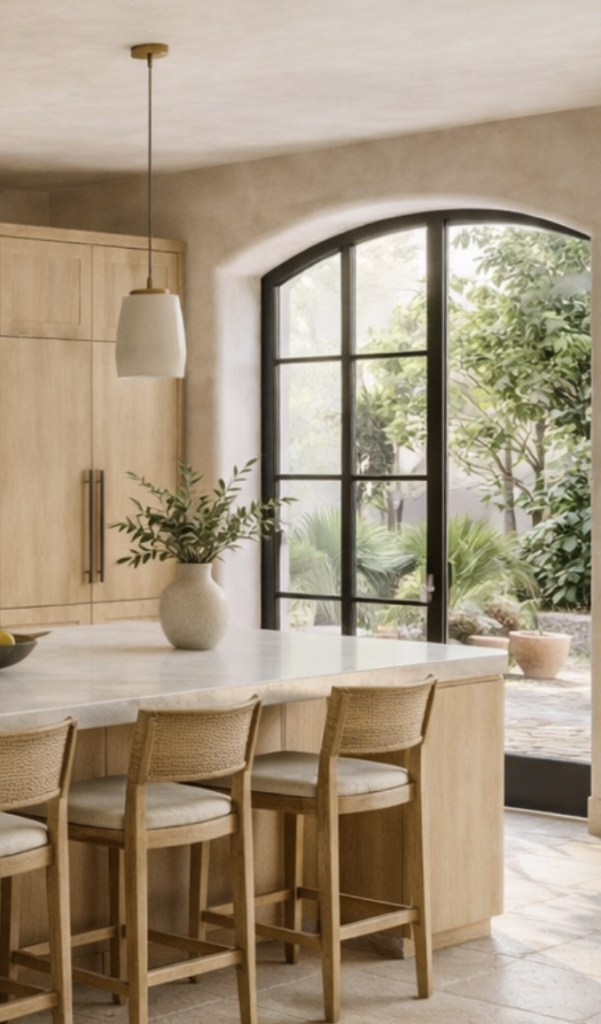
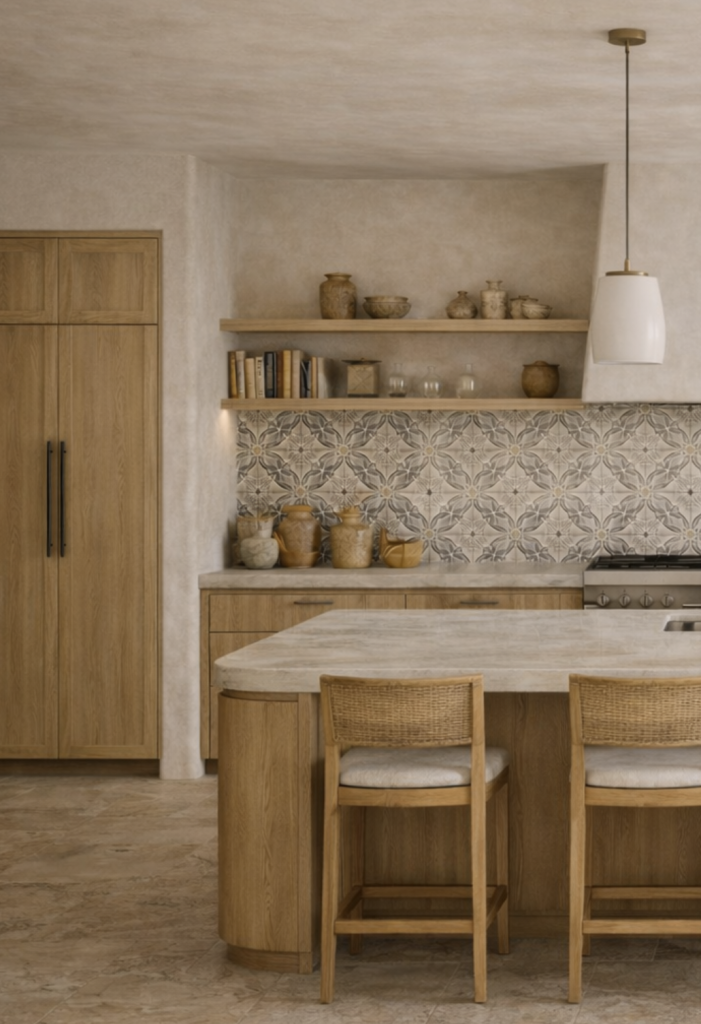
What truly sets Mediterranean kitchens apart is their architectural character. Arches, curves, and texture are everywhere, softening the space and giving it a hand-built feel.
Arched doorways and niches break up straight lines and add visual flow. Exposed wooden beams bring warmth overhead, while thick plaster walls and carved stone range hoods anchor the room. These details make the kitchen feel custom and timeless, as though it’s always been there.
In more modern homes, these elements can be introduced subtly, through a curved range hood, an arched cabinet design, or a rounded island edge, bringing Mediterranean warmth without overwhelming the space.
Mediterranean Kitchens in Small and Large Homes
Mediterranean design adapts surprisingly well to different kitchen sizes. In smaller kitchens, light walls, open shelving, and natural materials help the space feel warm without becoming heavy. Texture replaces excess décor, keeping the room visually calm.
In larger kitchens, Mediterranean style allows for more architectural drama. Expansive islands, statement range hoods, built-in dining nooks, and large arched openings create spaces that feel grand yet welcoming. Indoor-outdoor connections, such as doors leading to patios or courtyards, further reinforce the Mediterranean lifestyle.
Why Mediterranean Kitchens Stand the Test of Time
Mediterranean kitchen design works because it addresses real needs. It creates warmth in homes that feel sterile, order in spaces that feel chaotic, and beauty that doesn’t rely on trends.
Yes, natural materials require care. Wood and stone need maintenance, and the style encourages thoughtful curation rather than excess. But the reward is a kitchen that feels better year after year, a space that grows richer with time instead of feeling dated.
A Mediterranean kitchen isn’t just a design choice. It’s a way of living that prioritizes comfort, craftsmanship, and connection. And that’s why, no matter how design trends change, this style continues to feel right at home.