
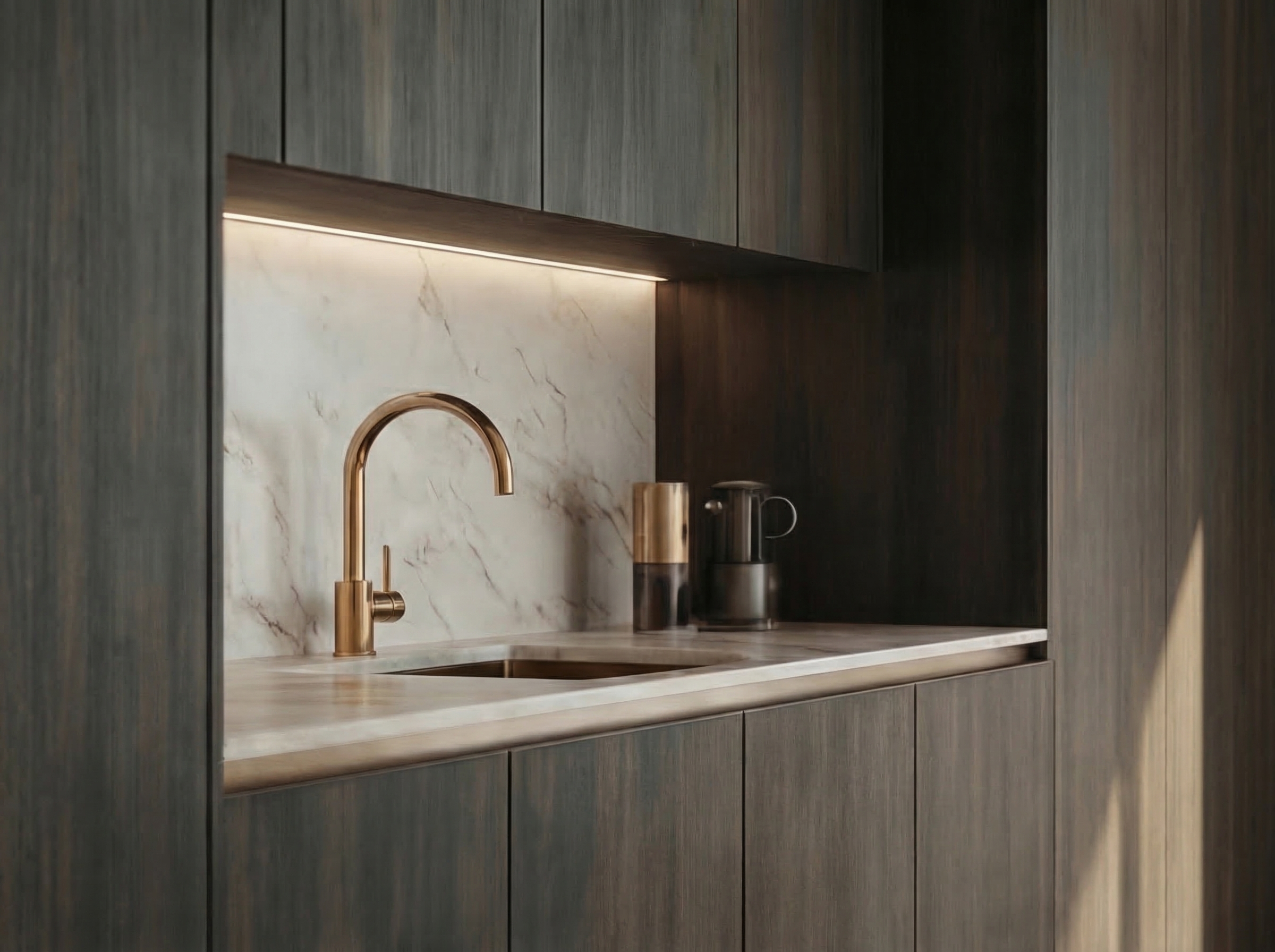
Whether you’re renovating a kitchen or moving into a new home, few decisions matter as much as the countertop. It is the surface you see, touch, and use every day. It frames your cabinetry, sets the tone for the entire space, and often becomes the centerpiece of entertaining.
On the Costa del Sol, where kitchens are designed not only for cooking but also for hosting and lifestyle, the right countertop material makes all the difference. A well-chosen surface isn’t just practical, it can increase your home’s value, reduce maintenance headaches, and elevate your daily life. In 2026, homeowners have more options than ever. But choice can also create confusion. Should you choose engineered stone, natural stone, laminate or something else?
This guide will walk you through the main categories of kitchen countertops in 2026, explain their strengths and drawbacks, and help you decide which is right for your home.
Natural Stone
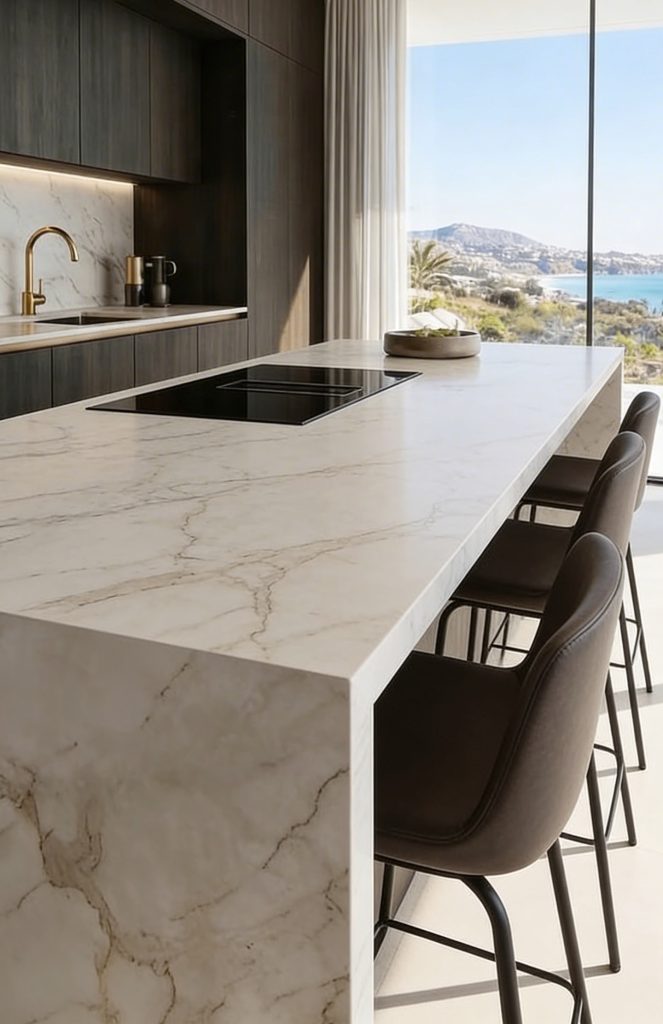
Natural stone has always been a symbol of kitchen luxury. Marble, granite, and limestone are among the most sought-after options, each offering unique patterns, textures, and colors that no engineered material can fully replicate. A natural stone countertop instantly gives a kitchen a sense of individuality and authenticity.
However, beauty comes with responsibilities. Marble, while elegant and luxurious, is porous and can stain or etch if exposed to acidic foods like citrus or wine. Granite is harder and more resilient, but it still requires periodic sealing to maintain its resistance to stains. Limestone offers a warm, rustic character but is softer and more prone to scratching and wear.
Drawbacks to Consider
- Maintenance → Most natural stones require sealing and ongoing care.
- Staining & Etching → Spills can leave permanent marks if not cleaned quickly.
- Cost → Premium slabs can be significantly more expensive than engineered alternatives.
- Durability → Softer stones like marble and limestone can scratch and chip.
Engineered Stone
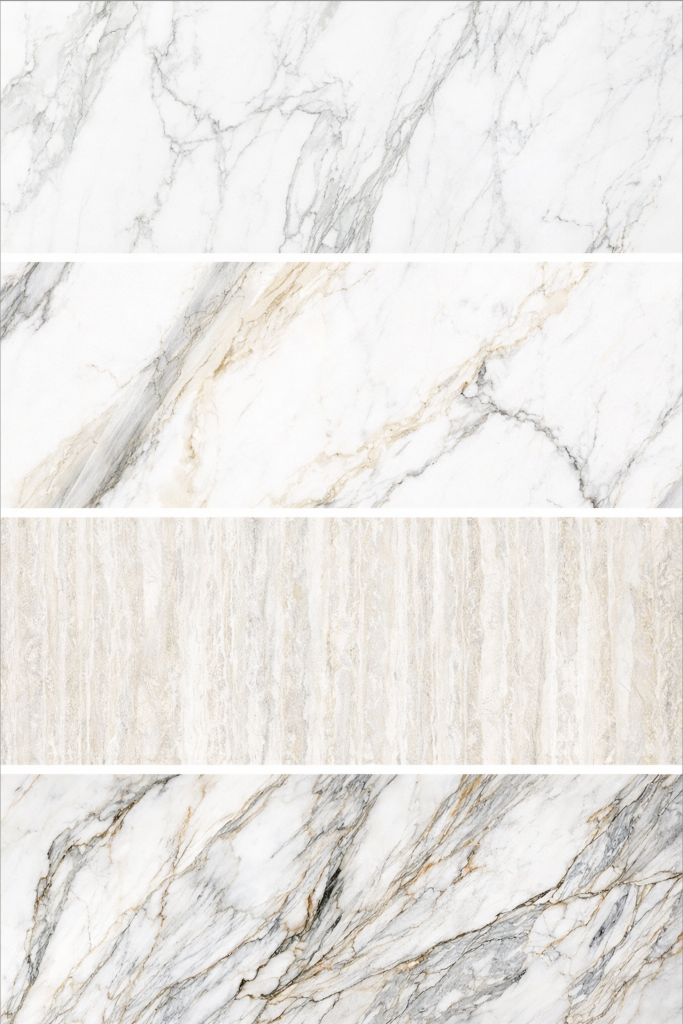
Engineered stone, such as quartz and composite blends, has become the go-to choice for many homeowners in 2026. Made by combining natural stone particles with resins and pigments, it delivers the beauty of stone with enhanced durability.
The main advantage of engineered stone is that it is non-porous. Unlike marble, granite, or limestone, it doesn’t require sealing and is naturally resistant to stains from wine, oil, coffee, or citrus. It is also harder to scratch and less likely to chip compared to softer natural stones. For busy households, this means far less worry about maintenance.
Another strength is its design flexibility. Engineered stone is available in a wide range of finishes, from clean minimalist tones to patterns that mimic marble or granite with remarkable realism. This allows homeowners to achieve the luxury look of natural stone without the same upkeep or risk.
Compared to natural stone, engineered stone is:
- Easier to maintain (no sealing or special cleaning required).
- More resistant to staining, etching, and bacteria.
- Available in consistent colors and patterns, unlike natural slabs which vary.
- Often more cost-effective than premium marble or granite.
Solid Surface
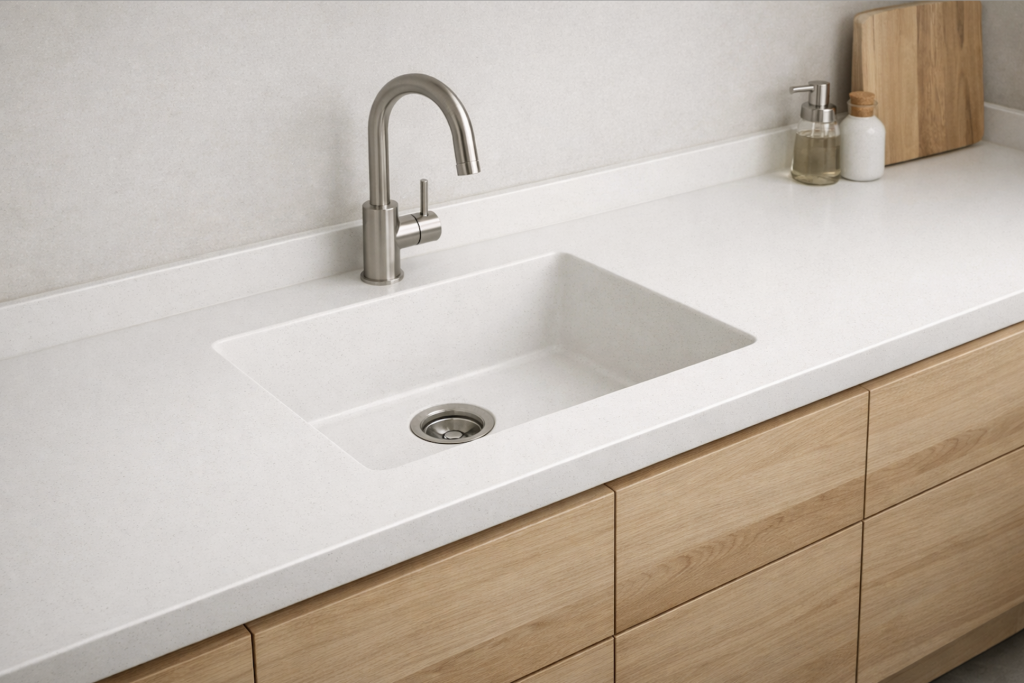
Solid surface materials like Corian are made from acrylic resins and minerals. Their main advantage is seamlessness. Joints can be invisible, and sinks or backsplashes can be integrated directly into the countertop. This makes solid surface ideal for modern, minimalist designs where continuity matters. It is also warm to the touch and repairable – scratches can often be sanded out. On the downside, solid surface is softer than stone or porcelain. It can scratch, scorch, and show wear over time. For design flexibility, however, it remains a strong contender.
Laminate
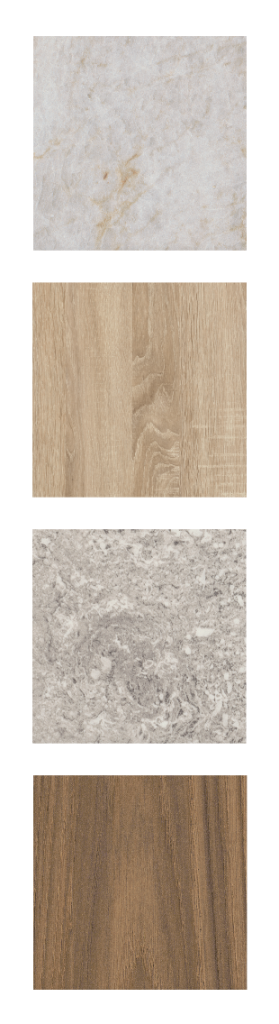
Laminate countertops have come a long way from the dated surfaces many people remember. Thanks to advanced manufacturing and printing technologies, modern laminates can convincingly replicate wood, stone, or even concrete finishes, offering homeowners a wide range of design possibilities.
What makes laminate appealing today is not just its cost-effectiveness, but its flexibility in style and application. It is lightweight, easy to install, and available in countless colors, textures, and patterns. For homeowners who want to refresh their kitchen with a contemporary look, laminate can deliver surprising visual impact.
While laminate is not as heat-resistant or long-lasting as stone or porcelain, modern laminates are engineered to withstand everyday kitchen use with ease. They resist stains, are simple to clean, and maintain their appearance well even in busy households. Although they can chip or scratch if treated roughly, with normal care they provide a reliable and durable surface for years.
Modern laminates prove that you don’t have to compromise on design. When chosen well, they can create a kitchen that looks refined, fresh, and in line with today’s trends.
Solid Wood
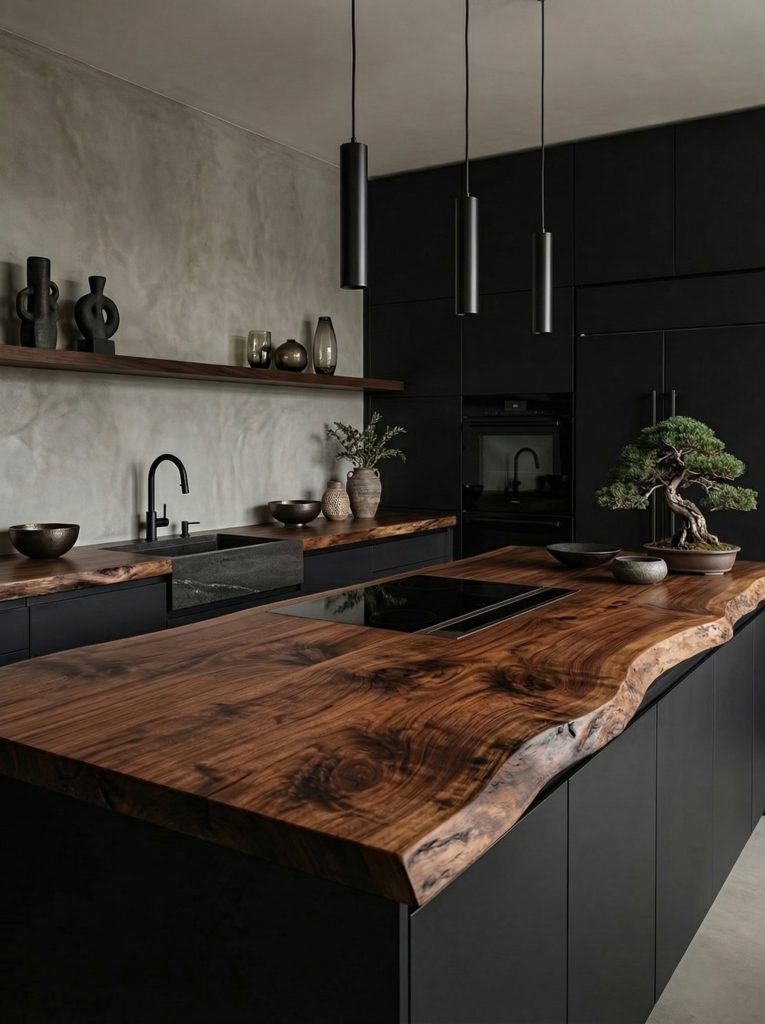
Solid wood countertops, such as oak, walnut, or ash, bring natural warmth and timeless character into the kitchen. They can be sanded and refinished, which means scratches and marks are not permanent but part of a renewable surface that gains charm over time.
Compared to other options, solid wood is considered a costlier choice, and it requires regular oiling and care to remain resistant to water and heat. Still, for many homeowners, the organic feel and the patina that develops over time make it a rewarding investment.
For those who value authenticity and natural materials, solid wood is a beautiful, long-lasting option that only improves with age.
Conclusion
Your kitchen countertop is the foundation of your kitchen’s design, the surface you use daily, and the detail that defines both lifestyle and resale value. From engineered stone and natural stone to laminate, and wood, every material comes with trade-offs.
The key is choosing the one that matches your home, your habits, and your vision. Ready to find out which material fits your lifestyle best? Book your free Kitchen Visualization Consultation here and preview your dream kitchen before it’s built.