

Most kitchens today are noisy—not with sound, but with clutter and chaos. They’re filled with mismatched appliances, endless gadgets, and color schemes that feel overwhelming instead of welcoming. When you walk into a space like that, it doesn’t relax you. It doesn’t inspire you to cook. It doesn’t make you want to stay and connect. Instead, it makes you want to get out as quickly as possible.
Japandi design solves that problem.At its core, Japandi is the marriage of Japanese minimalism and Scandinavian functionality. It creates kitchens that are calm, organized, and timeless, while still being warm and inviting. This is why so many people are embracing it – it’s not just a design trend, it’s a philosophy of living that makes the kitchen a place you actually want to spend time in.
What Japandi Actually Is (and Why It Works in Kitchens)
Japandi is about balance. From the Japanese side, you get minimalism and wabi-sabi, which is the idea that there’s beauty in imperfection, simplicity, and nature. From the Scandinavian side, you get hygge, the philosophy of comfort, warmth, and functionality.
When you combine the two, you end up with a kitchen that doesn’t just look beautiful, it works. It’s clutter-free, but not cold. It’s minimalist, but not empty. It’s functional, but not sterile. Instead, it feels intentional, lived-in, and practical.
This balance is what makes Japandi such a powerful design choice, especially for kitchens. The kitchen is the most-used room in most homes, and it needs to do more than just look good for Instagram. It needs to support cooking, eating, gathering, and even working. Japandi design meets that demand by focusing on what truly matters while stripping away everything that doesn’t.
The Japandi Kitchen Color Palette
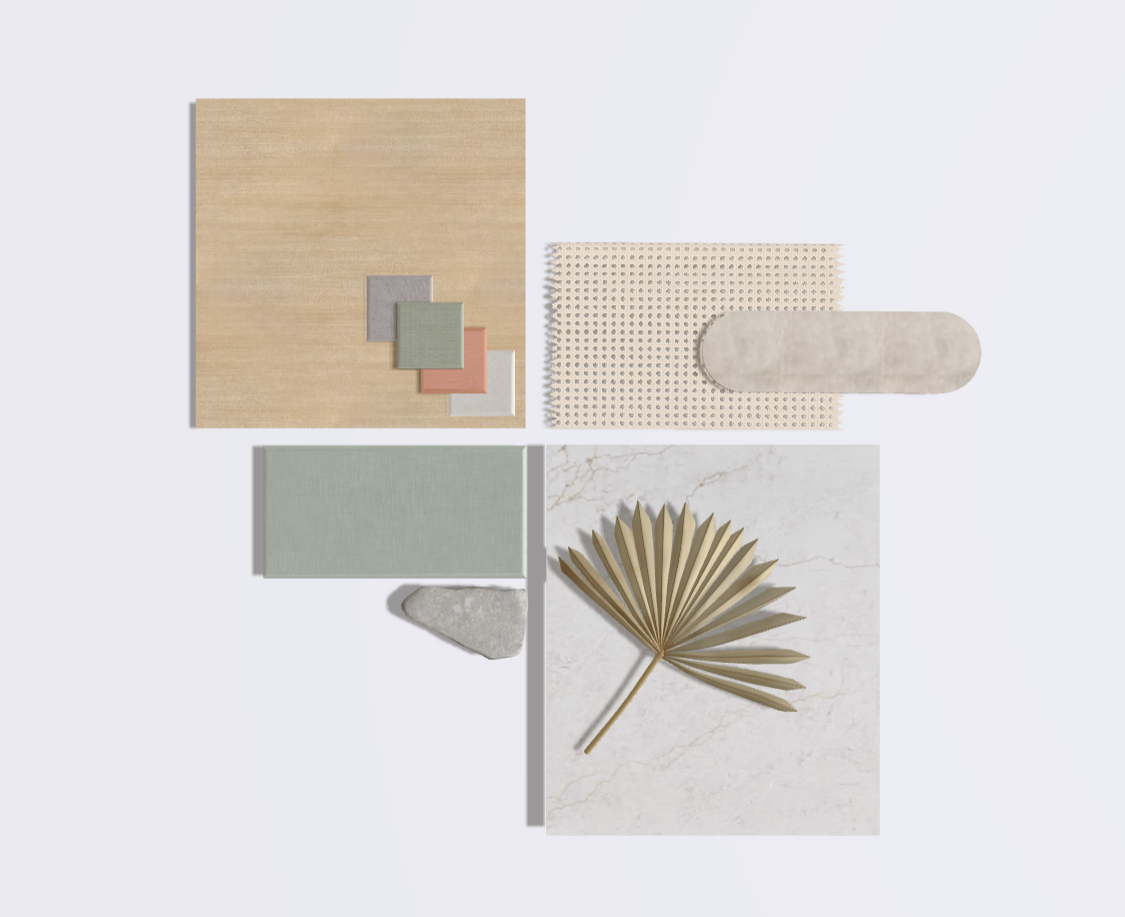
One of the first things you notice about a Japandi kitchen is its color palette. It doesn’t shout at you, it whispers. The dominant tones are neutral and earthy: soft whites, warm beiges, muted greys, and natural browns. This creates a calm foundation, which is exactly what you want in a kitchen where you spend hours every week.
But Japandi isn’t bland. To keep the space from feeling flat, deeper tones like charcoal, black, or muted green are added as accents. You might see a sage green cabinet paired with light oak wood, or a matte black faucet contrasting against a white stone countertop. The result is depth without chaos, interest without noise.
The Role of Natural Materials
Japandi design is built around authenticity. That’s why natural materials are at the heart of every Japandi kitchen.
Wood is the star here. Scandinavian design often leans toward pale woods like oak and ash, while Japanese design uses darker tones like walnut or chestnut. In a Japandi kitchen, you’ll often see a mix, light wood cabinetry paired with a darker wood island, for example. This creates contrast while keeping everything grounded.
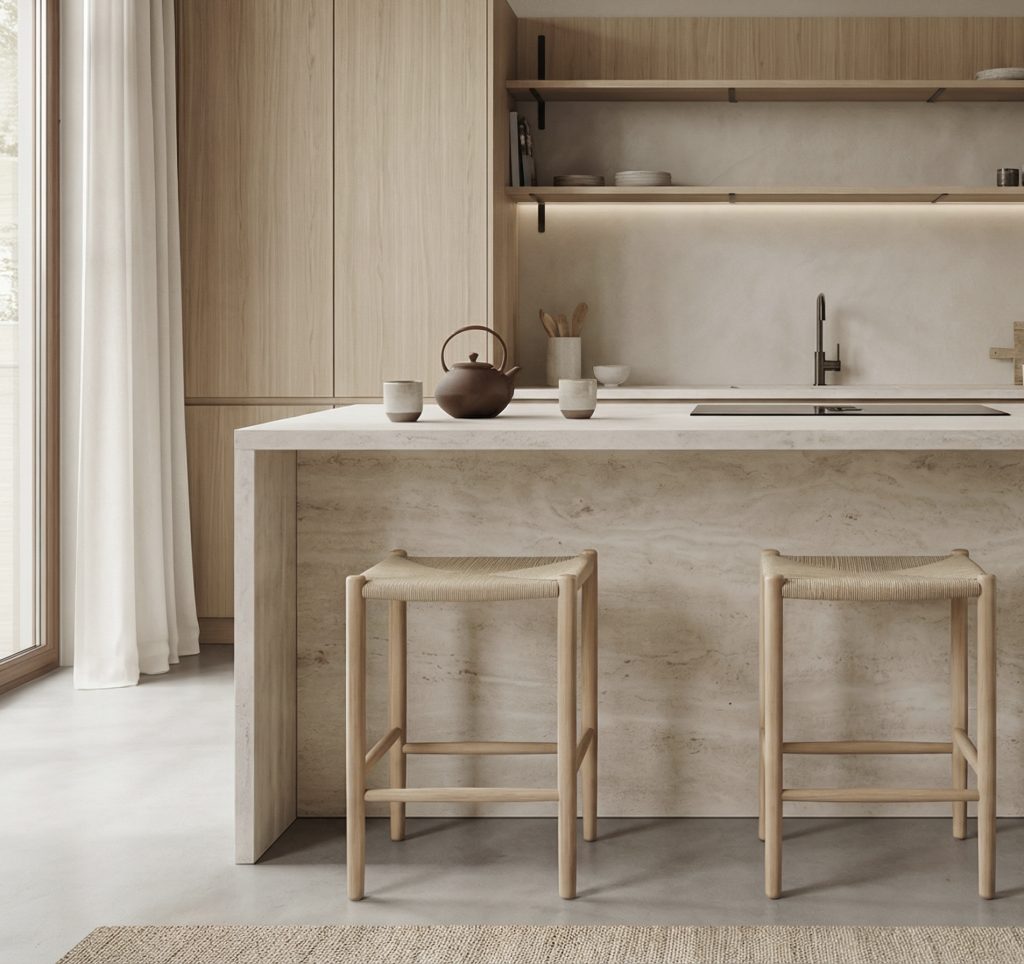
Stone is another key material, often used for countertops, backsplashes, or islands. Marble, soapstone, granite, or even textured concrete can be used to add weight and permanence. Unlike synthetic surfaces, these materials age with character, which ties directly into the wabi-sabi philosophy of finding beauty in the marks of time and use.
To balance these hard surfaces, softer materials are introduced through textiles and decor. Linen napkins, ceramic mugs, bamboo trays, or clay vases bring texture and warmth to the space. Together, these materials create a kitchen that feels natural and organic, not artificial.
The Japandi Kitchen Layout
A kitchen isn’t just about how it looks, it’s about how it works. This is where Japandi really shines.
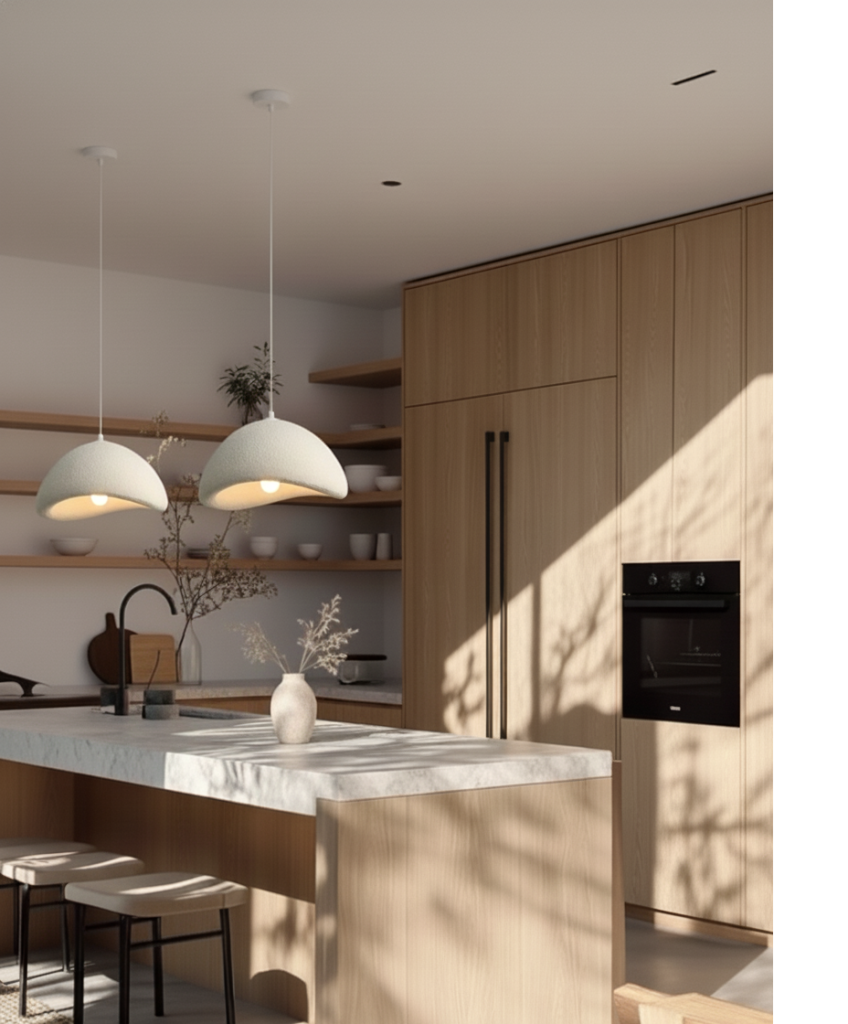
The layout is designed to be functional and efficient, but also calm and uncluttered. Cabinets are often handle-less or flat-fronted, which keeps lines clean. Appliances are usually built-in so they don’t disrupt the flow of the space. Open shelving is used sparingly, not to display every single plate you own, but to highlight a few carefully chosen pieces, like handmade ceramics or glassware.
Lighting is another key factor. Instead of harsh, bright lights, Japandi kitchens use soft, layered lighting. Pendant lamps with linen or paper shades add atmosphere above an island or dining nook. Under-cabinet lighting provides functionality for cooking tasks without overwhelming the room. Natural light is emphasized whenever possible, often through large windows or sliding doors.
Styling the Space: Less, but Better
Styling is where most people go wrong. They want Japandi but end up with “cluttered minimalism”, which is just a contradiction.
The key with Japandi styling is restraint. Countertops should be mostly clear. If you leave something out, it should serve a purpose and add beauty. A single vase with fresh greenery. A tray with neatly arranged oils and spices. A bowl of seasonal fruit. That’s enough.
Open shelves should hold a small collection of items you actually use and enjoy. Hand-thrown pottery, glass jars, or a couple of cookbooks add warmth without turning into visual noise.
Greenery is important too, but it’s subtle. A bonsai, a sprig of olive in a jar, or a small herb plant on the windowsill connects the space back to nature. Unlike maximalist styles that bring in dozens of plants, Japandi prefers just a few, chosen carefully.
Japandi Kitchens in Small vs. Large Spaces
The beauty of Japandi is that it adapts to different kitchen sizes.
In a small kitchen, Japandi is almost a secret weapon. Minimal cabinetry, light wood, and pale tones make the space feel larger than it is. Open shelving replaces bulky upper cabinets, and sliding doors or hidden storage maximize every square inch. Because Japandi avoids clutter by design, small kitchens end up feeling open and breathable instead of cramped.
In larger kitchens, Japandi allows for more features while keeping them intentional. A central island with a waterfall stone countertop can double as a prep area and gathering spot. A built-in banquette with linen cushions creates a cozy dining nook. Large windows or sliding doors extend the kitchen into the outdoors, reinforcing the connection to nature.
Appliances and Fixtures
Japandi kitchens avoid flashy finishes. Shiny chrome and high-gloss appliances break the calm. Instead, you’ll see matte finishes in white, black, or brushed steel. Sinks are often deep under-mount or farmhouse-style, while faucets are matte black, brushed brass, or muted steel.
Even the smallest details matter. If there’s visible hardware on cabinets, it’s kept minimal and understated. In many cases, there’s no hardware at all, which keeps the lines uninterrupted. These subtle choices may not stand out at first glance, but together they create the cohesive, intentional feel that defines Japandi.
Why Japandi Kitchens Are Worth It
So, why go through the effort of creating a Japandi kitchen? Because it solves real problems.
If you’re tired of clutter, Japandi forces you to edit down and only keep what matters. If you’re sick of kitchens that look great but function poorly, Japandi makes sure the space is practical. And if you don’t want to redo your kitchen every five years to keep up with trends, Japandi gives you a timeless design that will look relevant for decades.
Of course, there are trade-offs. You need to maintain discipline to keep clutter from creeping back in. Natural wood and stone require more care than synthetic alternatives. But the payoff is huge: you get a kitchen that feels calm, intentional, and deeply satisfying to live in every single day.
Final Thoughts
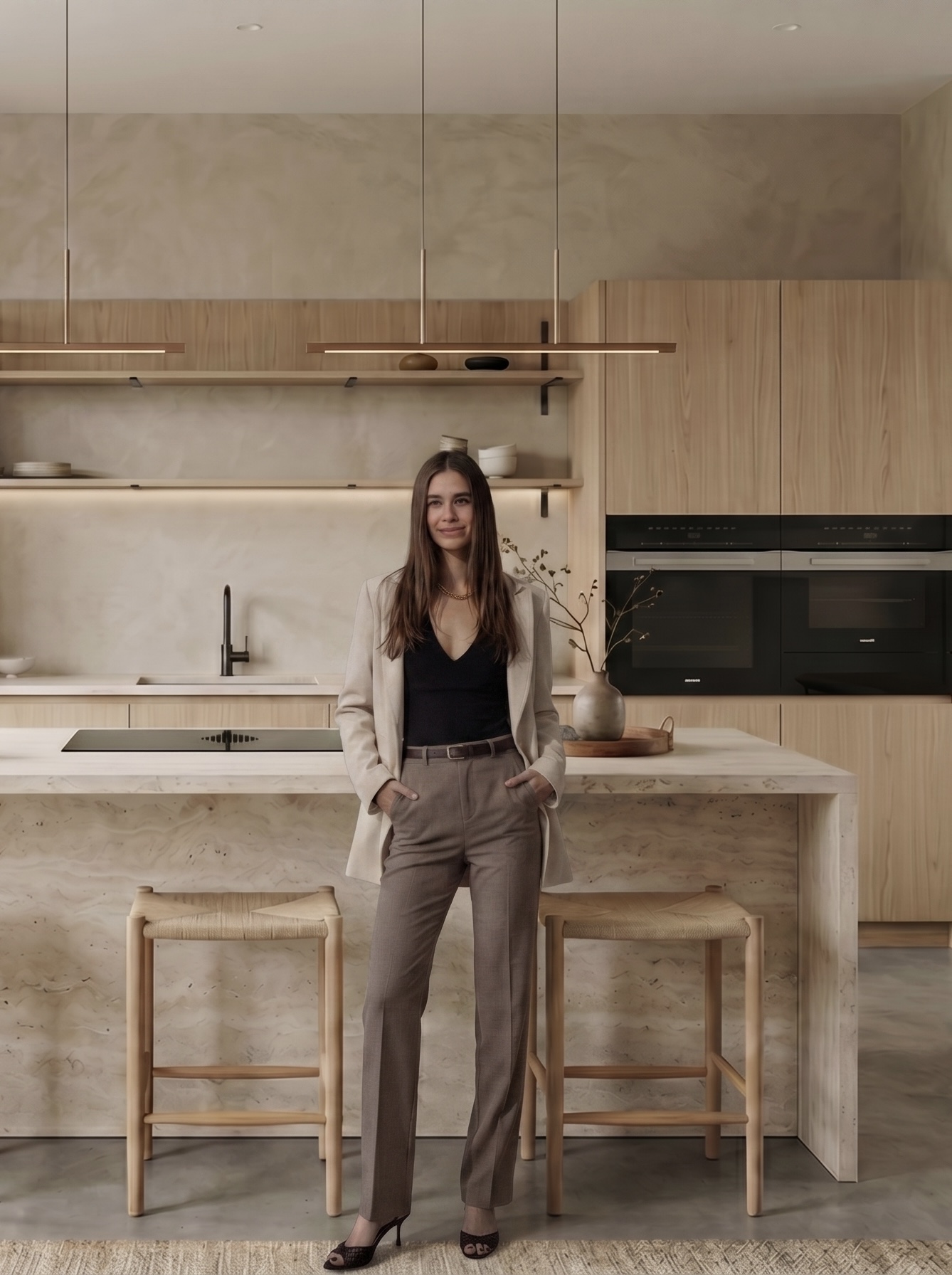
A Japandi kitchen isn’t about chasing a trend. It’s about creating a space that makes your life better. By combining Japanese minimalism with Scandinavian warmth, you end up with a kitchen that is practical, beautiful, and timeless.
It’s not just a place to cook. It becomes a sanctuary. A gathering place. A part of your home that helps you slow down, breathe, and enjoy the everyday rituals of life.
If you strip it all down, Japandi comes down to this: fewer things, done better. And if you can apply that principle to your kitchen, you’ll never want to design it any other way.