
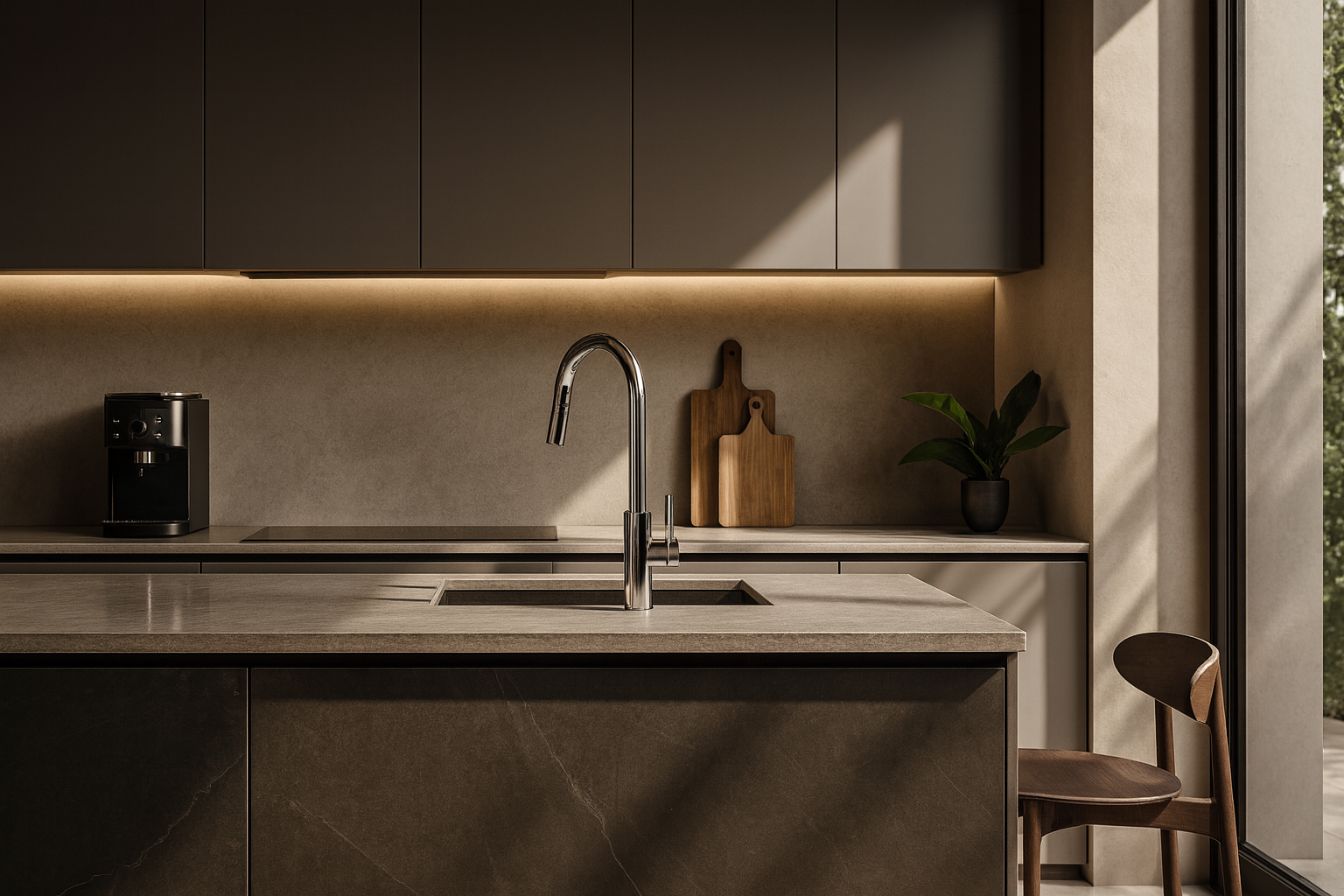
When people hear the phrase “modern kitchen”, they often picture something cold, stark, and unwelcoming. White cabinets, glossy surfaces, maybe a sterile island with a single barstool. But the truth is, modern kitchen design isn’t about stripping away warmth, it’s about stripping away what’s unnecessary.
The reason modern kitchens have become so popular is because they hit the sweet spot between efficiency, minimalism, and innovation. They’re clean, but not empty. They’re sleek, but not soulless. And when done right, they’re some of the most livable and timeless spaces you can create in your home.
What Defines a Modern Kitchen?
“Modern” gets thrown around in design conversations all the time, but when it comes to kitchens, it actually has a clear meaning. Modern kitchen design emphasizes simplicity, function, and innovation.
Instead of ornate details and decorative trims, modern kitchens lean into clean lines, flat surfaces, and open layouts. Cabinets are often handle-less. Appliances are integrated so they disappear into the design. Materials are chosen for both their look and their practicality. Technology often plays a bigger role here than in traditional or rustic kitchens.
The goal of a modern kitchen is to create a space where you can cook, eat, and gather in harmony without fighting against clutter or outdated layouts. Everything is designed with intention.
The Modern Kitchen Color Palette
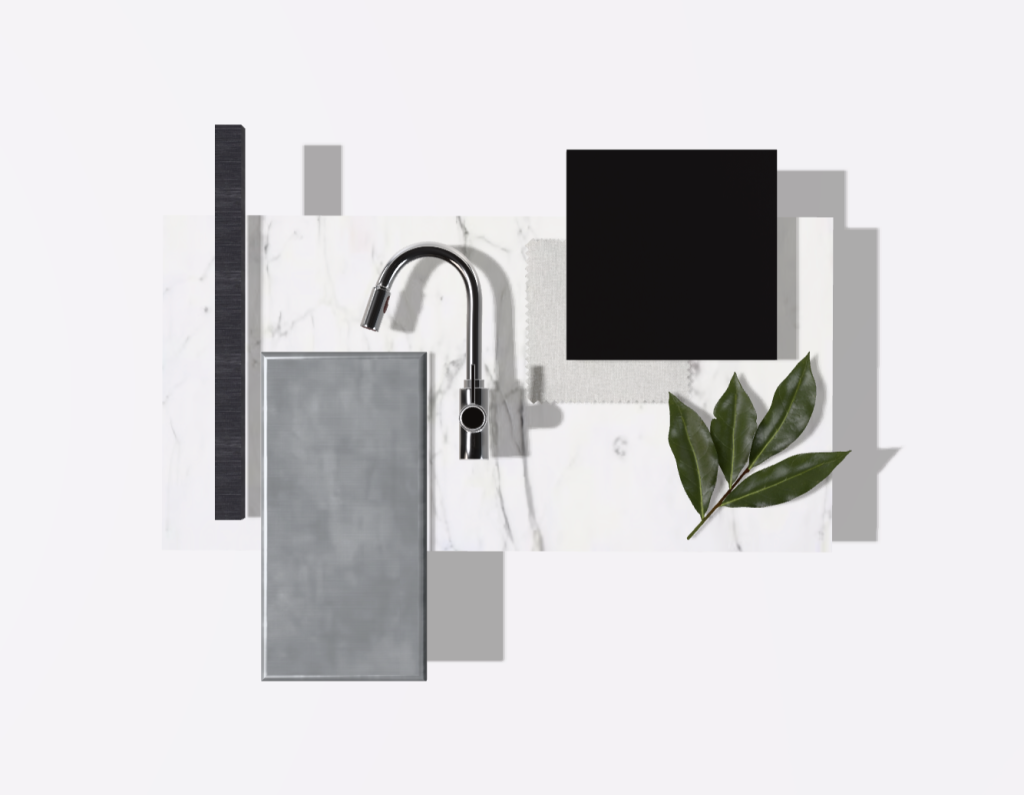
Unlike rustic or farmhouse kitchens, modern kitchens usually lean into more streamlined, monochromatic color palettes. Neutrals dominate: whites, blacks and greys. But modern doesn’t mean boring. The magic happens in the contrasts. Matte black cabinetry paired with white stone counters. Grey walls balanced by light oak floors. A pop of metallic from a brushed steel faucet or copper pendant light. The palette is restrained, but it uses bold contrasts to stay interesting.
Materials That Make a Kitchen Modern
One of the most defining aspects of a modern kitchen is the materials. These spaces embrace quality and durability. Cabinetry is often made of flat-panel wood or laminate, sometimes in matte finishes to reduce glare and fingerprints. Stone countertops, quartz, marble, or granite, dominate, offering both durability and elegance. Backsplashes are usually simple, often extending the same stone from the counter up the wall for a continuous look.
Layout: Why Modern Kitchens Work So Well
The layout of a modern kitchen isn’t random, it’s designed around efficiency.
Islands play a central role in many modern designs. They serve as both prep space and social hubs, often doubling as dining areas or workstations. Built-in appliances keep surfaces clean and maximize usable space. Storage is carefully planned, with deep drawers, hidden pantries, and smart organizers.
Lighting is layered for both form and function. Recessed spotlights provide overall brightness, pendant lights act as visual anchors above the island, and under-cabinet lighting adds focused visibility for cooking tasks. Together, this ensures that the kitchen feels bright and usable without being harsh.
Styling a Modern Kitchen Without Making It Sterile

The biggest risk with modern kitchens is that they can look too clinical. To avoid that, styling needs to be intentional.
Keep counters clear, but don’t strip them bare. A coffee machine, a fruit bowl, or a set of cutting boards leaning against the backsplash add functionality and style at the same time.
Seating is another way to bring life into the space. Modern kitchens often include stools or chairs with slim silhouettes, usually in metal, wood, or leather. These soften the harder edges of stone without breaking the aesthetic.
Plants are welcome here, too. A single large plant in the corner, or a few herbs in pots on the counter, instantly bring warmth and balance to a modern kitchen.
Modern Kitchens in Small vs. Large Homes
The principles of modern kitchen design adapt easily to both small apartments and large open-plan homes.
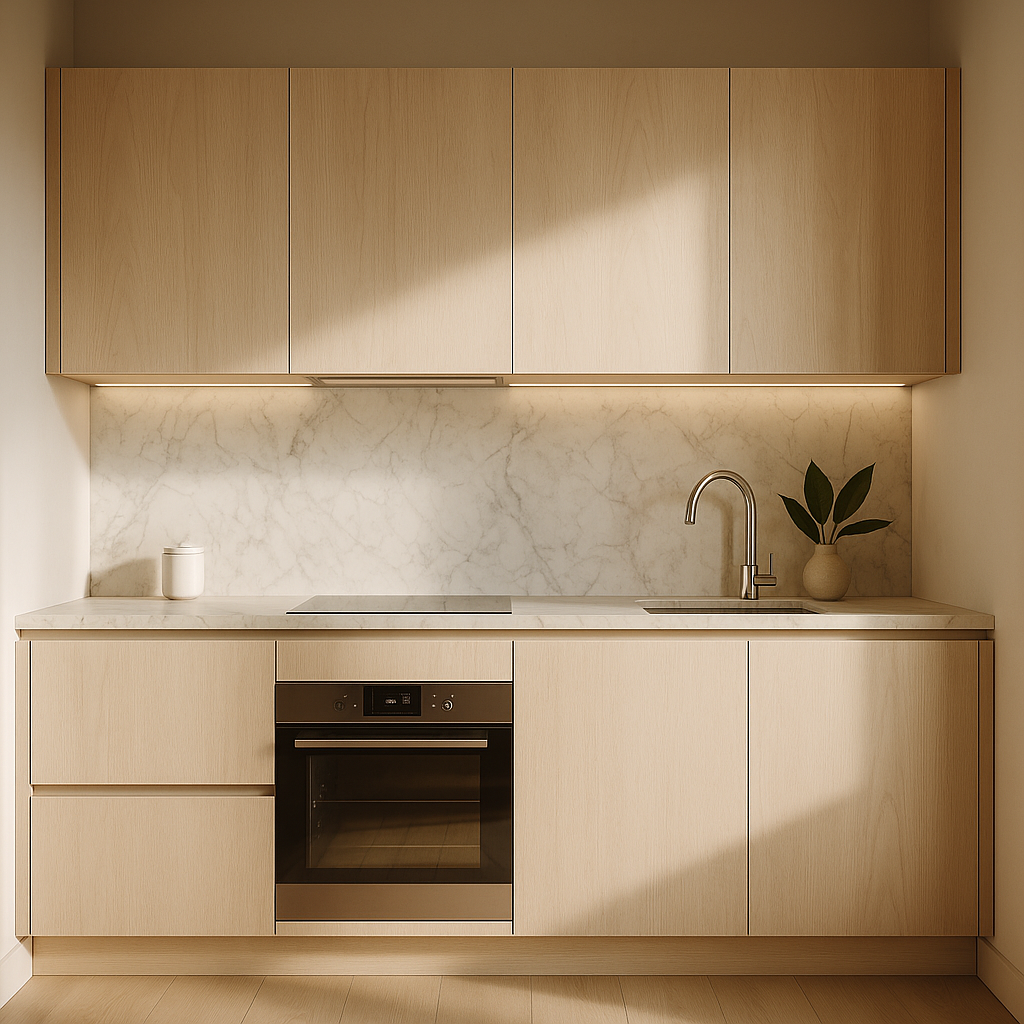
In small kitchens, the emphasis on clean lines and hidden storage is a lifesaver. Handle-less cabinets and integrated appliances keep things from feeling cramped. Lighter colors expand the sense of space, while mirrored or glass elements help reflect light.
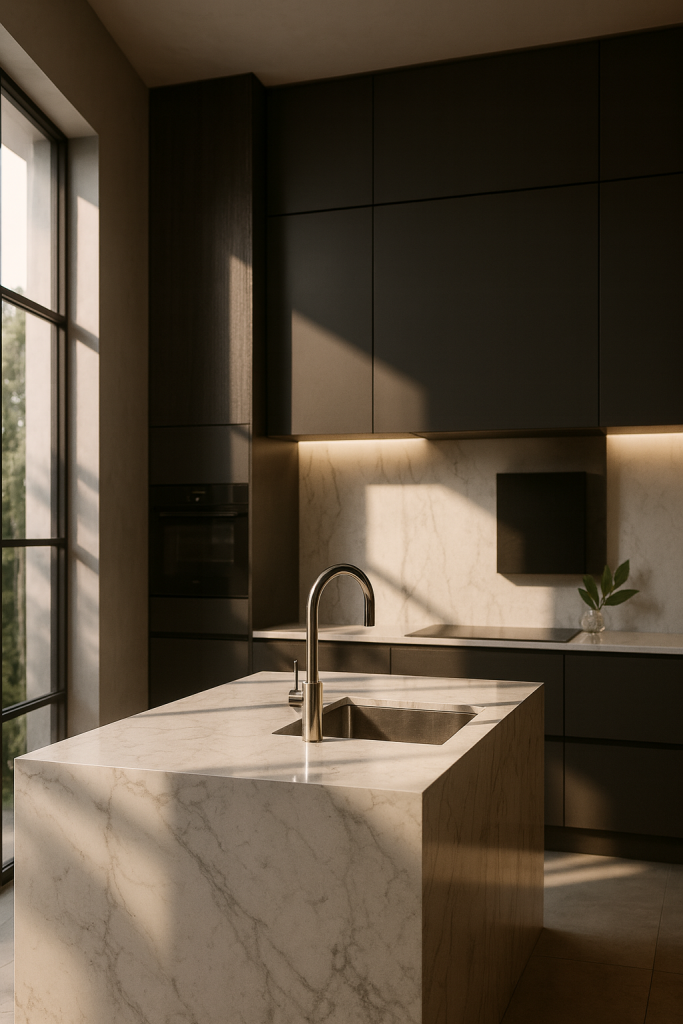
In larger kitchens, the modern style allows for bold gestures. A large island with a waterfall countertop. Floor-to-ceiling cabinetry that hides everything from appliances to pantries. Wide, open layouts that connect the kitchen seamlessly with the dining and living areas.
Modern kitchens thrive in both settings because they prioritize function without sacrificing style.
Appliances and Technology
This is where modern kitchens really stand out. Technology isn’t an afterthought—it’s built into the design.
Think smart refrigerators, induction cooktops, built-in ovens, and hidden dishwashers. Touchless faucets and under-counter lighting with motion sensors make the space not only stylish but also efficient.
The goal is to make the kitchen feel effortless. You should be able to cook, clean, and move around without friction. Appliances disappear into cabinetry or line up seamlessly along walls. Even outlets and switches are hidden or designed to blend into the background.
Why a Modern Kitchen Is a Smart Choice
Modern kitchens have staying power because they solve real problems. They keep clutter hidden, they maximize functionality, and they look minimal without feeling trendy. Unlike farmhouse or ultra-traditional designs, which can fall in and out of style, modern kitchens tend to age gracefully.
That doesn’t mean they’re maintenance-free. Matte cabinets can show smudges. Stone countertops need care. But overall, the investment pays off because the design is timeless and the functionality is unmatched.
Most importantly, modern kitchens work for how people actually live today. They support open-concept living, they integrate technology, and they offer spaces that double as offices, dining rooms, or gathering areas.
